
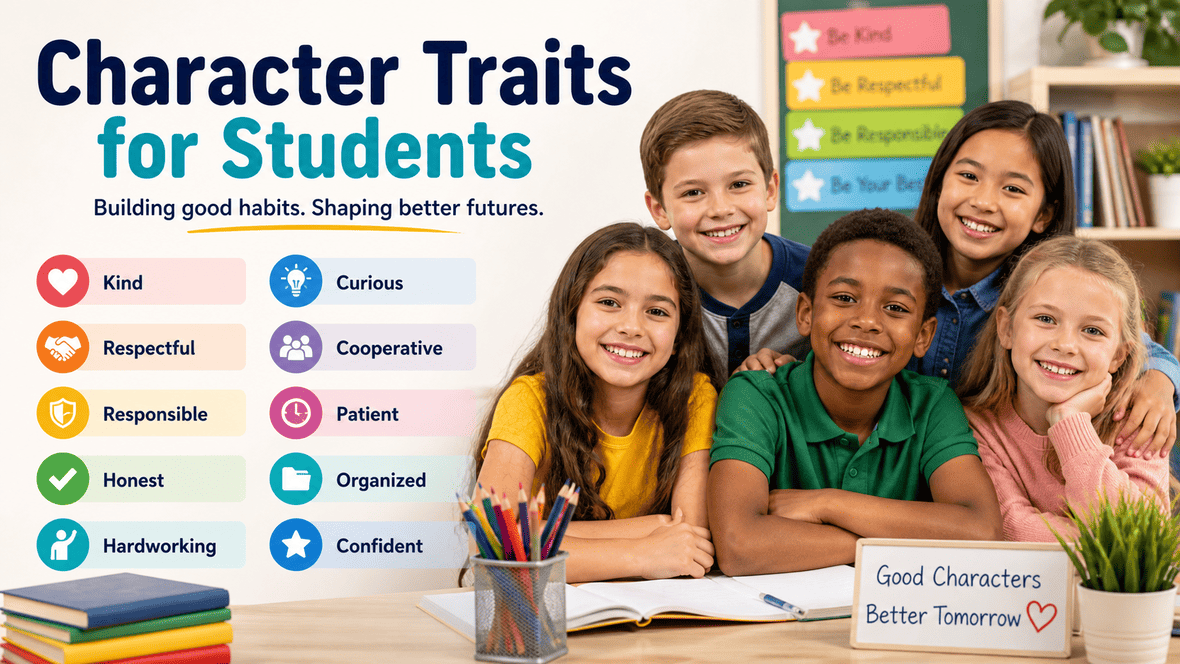
A list of character traits for students helps define the qualities that support both academic success and personal development. These traits influence how students learn, behave, and interact with others in school and everyday life.
Understanding character traits for students at an early age helps build positive habits. Teachers and parents often use structured lists to guide behavior and encourage consistent growth over time.
Why Character Traits Matter for Students
Character traits are essential for a student’s development. They shape both learning ability and social behavior in the classroom.
Students who develop strong traits are more likely to:
- Stay focused on tasks
- Respect teachers and classmates
- Handle challenges with patience
For example, responsibility helps students complete assignments on time, while respect improves communication. These traits create a healthier and more productive learning environment.
In addition, character traits help students become more independent over time. When students learn responsibility and self-discipline early, they rely less on constant guidance and start managing their own tasks more effectively. This independence is important not only for school success but also for long-term personal growth.
Strong character traits also improve decision-making. Students who understand values like honesty and respect are more likely to make better choices, even in difficult situations. This helps them avoid negative behaviors and build a more positive mindset.
List of Positive Character Traits for Students
A strong list of positive character traits for students includes qualities that support growth and success:
- Responsible
- Respectful
- Honest
- Kind
- Patient
- Hardworking
- Curious
- Cooperative
- Organized
- Confident
These traits do not develop overnight. They require consistent practice and reinforcement in both school and home environments. When students are encouraged to apply these traits in real-life situations, they begin to understand their true value.
For example, a student who practices kindness regularly will naturally become more supportive toward classmates. Over time, these repeated actions turn into long-lasting habits that shape overall personality.
Character Traits List for Elementary Students
A clear character traits list for elementary students should focus on simple, easy-to-understand behaviors.
Examples include:
- Sharing with others
- Listening carefully
- Following rules
- Helping classmates
- Saying “thank you”
These actions reflect deeper traits like kindness and responsibility. Practicing them daily helps students naturally develop strong character.
How Students Can Develop Good Character Traits
Building strong character takes time and consistency. Students can improve by practicing small habits every day.
Some effective methods include:
- Setting simple personal goals
- Learning from mistakes
- Observing positive role models
- Practicing self-control
In addition, encouragement from teachers and parents plays a key role. Positive feedback helps reinforce good behavior and builds confidence.
Another important factor is self-reflection. When students take time to think about their actions and behavior, they can better understand their strengths and areas for improvement. This awareness helps them make gradual but meaningful progress.
Teachers can also support this process by developing strong character traits of a good teacher that encourage teamwork, communication, and responsibility.
Examples of Character Traits in School Life
Character traits appear in everyday school situations. A student who shows honesty admits mistakes, while a cooperative student works well in groups.
Other examples include:
- Showing patience while waiting
- Helping classmates when needed
- Staying organized with school materials
These small actions have a strong impact on both academic performance and social relationships.
Conclusion
A well-structured list of character traits for students helps guide behavior, improve learning, and build essential life skills. By focusing on positive traits, students develop habits that support both school success and personal growth.
Over time, these traits become part of a student’s personality and help shape a strong and balanced character.